
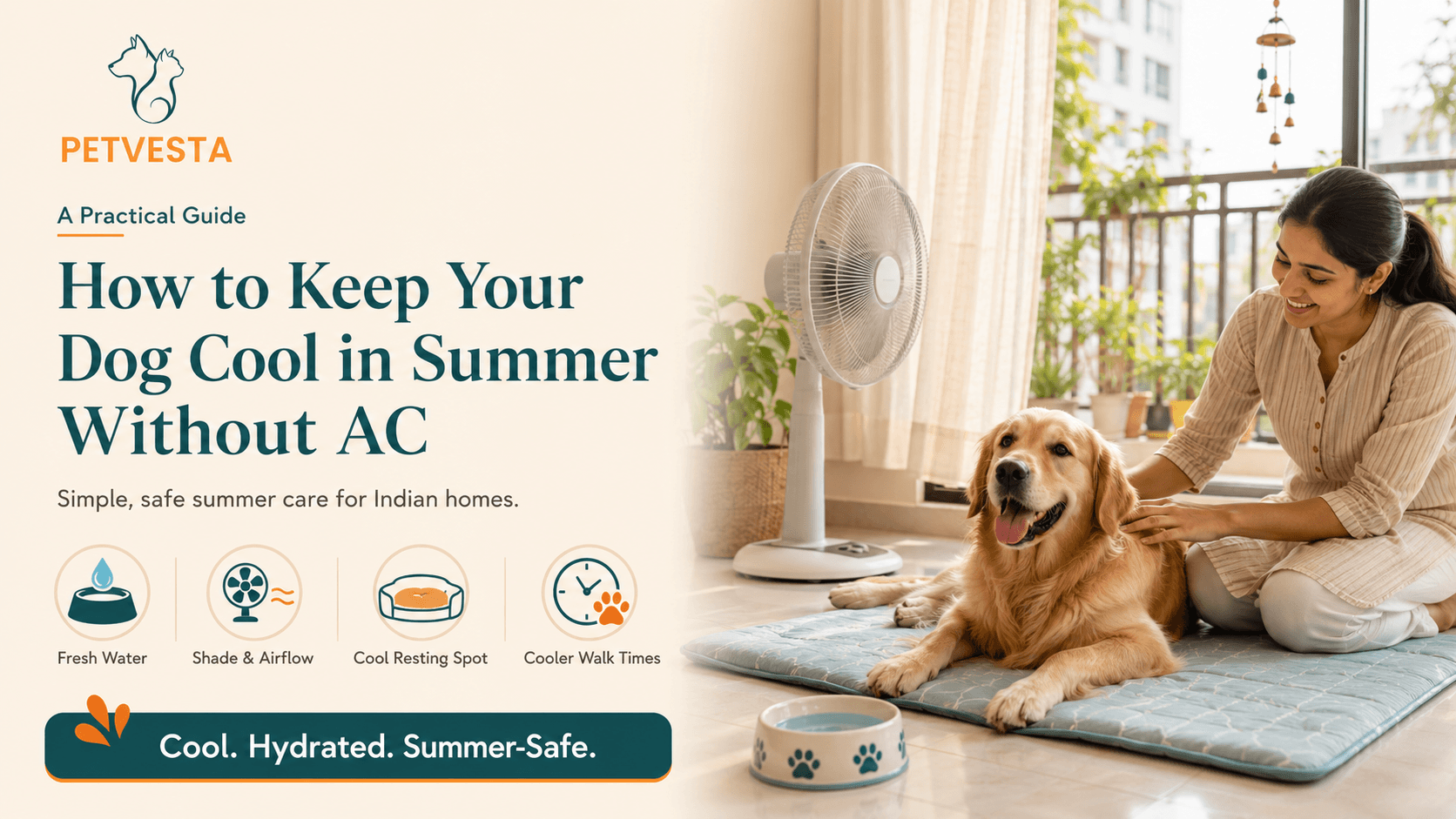
How to Keep Your Dog Cool in Summer Without AC: A Practical Guide for Indian Pet Parents
By Rhea Kapoor
When summer gets harsh and the house starts feeling like an oven, most pet parents worry about the same thing: is my dog coping with this heat? If you do not have AC, or if power cuts are common, the good news is that there are still practical, vet-backed ways to keep your dog cooler and safer at home.
Why this matters
Dogs do not sweat the way humans do, so they can overheat much faster in hot and humid weather. Heatstroke can become a medical emergency, which is why early prevention matters far more than waiting for symptoms to appear.
What works best without AC
If you want to keep your dog cool in summer without AC, focus on the basics that matter most:
- Fresh water at all times.
- Shade and strong airflow.
- Cool resting surfaces like tiles or cooling mats.
- Walks only during cooler hours.
- Less activity in peak afternoon heat.
Set up the coolest part of the house
Pick the coolest room or corner in the house and make that your dog’s summer resting zone. Fans, cross-ventilation, closed curtains, and tiled floors can all help reduce heat stress, especially in Indian homes without central cooling.
Cooling mats, damp towels, or a wrapped frozen bottle placed near the resting area can help too, as long as the dog can move away if it wants. The goal is to create relief, not force the dog onto something uncomfortable.
Keep water easy and constant
Your dog should always have access to clean, cool water, and the bowl should be refilled often during hot days. On very hot days, keeping more than one bowl around the house can make hydration easier.
Steel and ceramic bowls usually stay cooler than plastic, especially in warm rooms. Some dogs also enjoy water-rich treats or small frozen snacks, but these should support hydration, not replace water.
Change walk timing immediately
One of the biggest summer mistakes is walking a dog during late morning or afternoon heat. The safest time is early morning or after sunset, when the air and ground are cooler.
Always test the pavement first. If it feels too hot for your hand, it is too hot for your dog’s paws. Shorter walks are better than heat-heavy walks.
Reduce exercise and indoor heat
Dogs do not need heavy physical activity in extreme summer weather. On very hot days, swap long walks for short sniff breaks, indoor games, chewing sessions, or puzzle feeders.
This matters even more for puppies, senior dogs, overweight dogs, and flat-faced breeds, because they can overheat faster. Staying calm is part of staying cool.
Watch for heat stress signs
Early signs of overheating include:
- Heavy panting
- Drooling
- Restlessness
- Red gums or tongue
- Weakness or lethargy
- Vomiting or collapse in severe cases
If you notice these signs, move your dog to a cooler area immediately and start gentle cooling while contacting a vet if symptoms are serious or not improving.
What to avoid
- Never leave your dog in a parked car.
- Do not force walks during peak sun hours.
- Do not ignore early panting and restlessness in humid heat.
- Do not assume fans alone are enough without water, shade, and reduced activity.
FAQs
Can I keep my dog cool without AC?
Yes. Water, shade, fans, cooler surfaces, and smart walk timing can make a big difference, especially when used together.
What is the best way to cool down a dog at home?
Move the dog to the coolest area, improve airflow, provide cool water, and offer a cool surface like tiles or a cooling mat.
Is a fan enough for dogs in summer?
A fan helps, but it works best along with shade, hydration, and reduced heat exposure.
What is the best time to walk a dog in summer?
Early morning and late evening are usually the safest times because the air and ground are cooler.
What are the first signs of heatstroke in dogs?
Heavy panting, drooling, red gums, weakness, vomiting, confusion, and collapse are important warning signs.
Simple takeaway
If you want to keep your dog cool in summer without AC, focus on simple things done consistently: water, airflow, shade, cool surfaces, and smarter walks. In Indian summers, these basics can make the difference between discomfort and real danger.